





















Originally published in the News-Press by Amy Bennett Williams on January 26, 2026
Health officials are warning of a toxin-producing algae bloom in the Caloosahatchee.
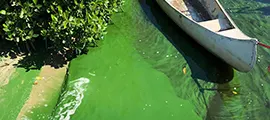
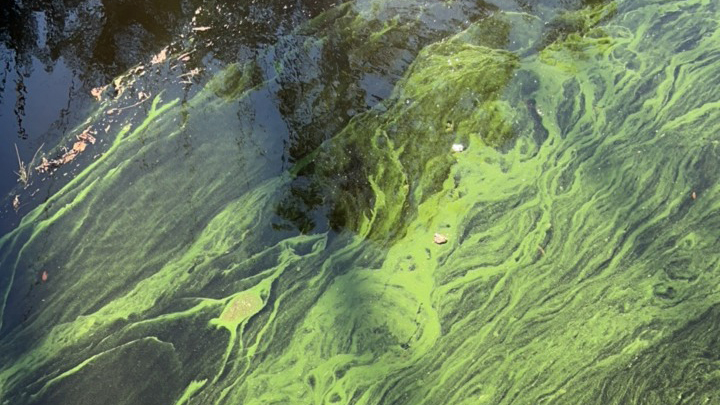
The cyanobacteria – also called blue-green algae – appeared in an upriver Alva canal.
Alva resident Penny Ackerly, who spotted then reported the bloom, which she describes as “bright green streaks on the surface,” says she’s been seeing them “Every year since at least 2016.”
Although some kinds of blue-green algae are a perfectly normal part of natural systems, some varieties – like the one in Ackerly’s canal – can spell trouble. They release substances called cyanotoxins, which as the name implies, can contaminate the surrounding water.
After testing, the Florida Department of Environmental Protection’s identified the Alva cyanotoxin as microcystin – one of the bad guys. The U.S. Environmental Protection Agency don’t mince words: “Microcystin is a potent liver toxin and possible human carcinogen, it says on its website. “Cyanotoxins can also kill livestock and pets that drink affected waters. Fish and bird mortalities have also been reported in water bodies with persistent cyanobacteria blooms.”
At least it’s not hugely concentrated, says river advocate Jason Pim, a board member of the nonprofit Calusa Waterkeeper, which works to improve the health of the Caloosahatchee and its watershed.
“The microcystin count came back at 1.4 micrograms per liter,” Pim wrote in an email. “That’s under the (EPA’s) advisory threshold of 8 micrograms per liter. But erring on the side of caution is not anything we’d complain about!”
Calusa Waterkeeper has long pushed officials to better communicate with the public about the presence and risks of cyanobacteria, which can photosynthesize, as plants can. When the algae populations explode, the woes range from choking stench to pet deaths, after animals drink toxin-contaminated water.
Some cyanotoxins are linked to serious visible health problems, including liver damage and neurodegenerative diseases. Children and pets are more vulnerable, so keeping them away from the water during a bloom is especially important, the health department warns. In a release about the bloom, it wrote,”(The) toxins, can be harmful to human and pets as well as ecosystems, including fish and other aquatic animals. Sensitive individuals (e.g., children, the elderly, and those who are immunocompromised) may still be at risk even at low concentrations and should avoid any exposure.”
Residents began reporting the green water Jan. 17; the DEP took samples the 20th and the advisory went out Jan. 23. Emailed questions about the bloom didn’t get an immediate response, but once a repeated test shows the toxins are back below a safe threshold,, the department will issue an all-clear.
Original Story