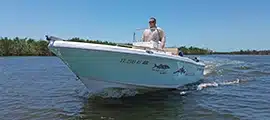



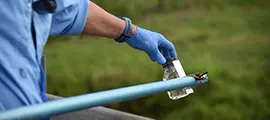



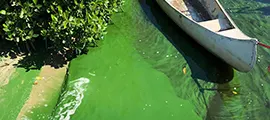


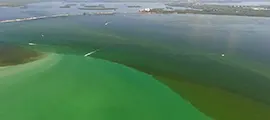








Published in the international journal Toxins, the study documents ADAM, an innovative monitoring system developed in Southwest Florida to better understand airborne exposure to harmful algal toxins.
Calusa Waterkeeper and Brain Chemistry Labs have announced the publication of a collaborative peer-reviewed research study in the international scientific journal Toxins, documenting a new approach to monitoring airborne cyanobacterial toxins and advancing scientific understanding of airborne exposure associated with harmful algal blooms.
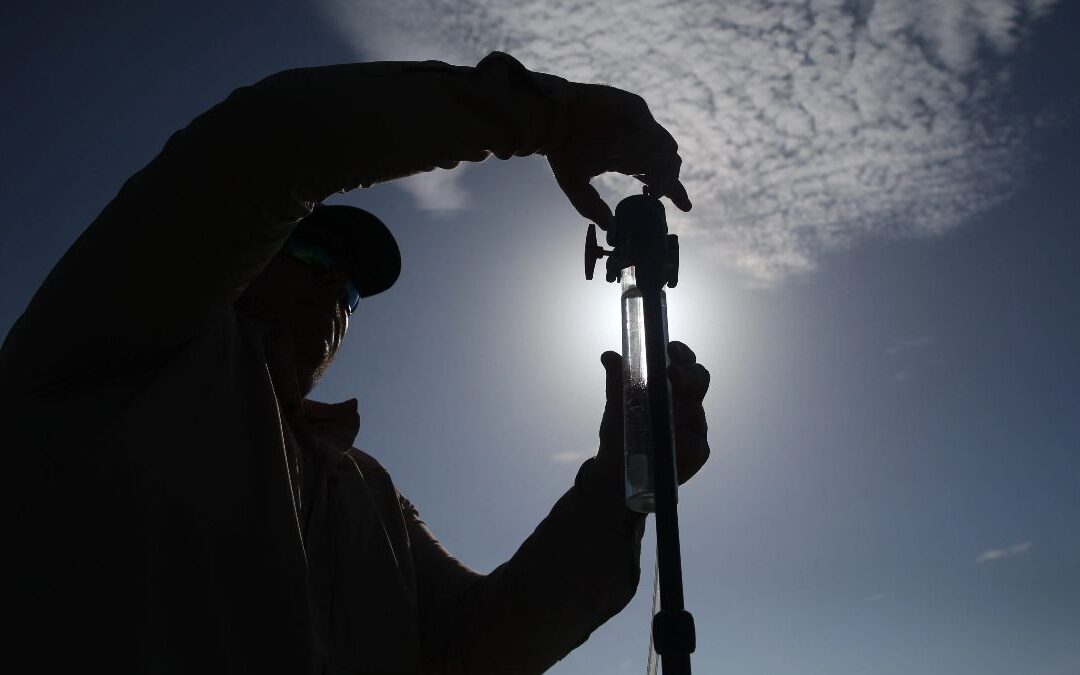
The paper, Developing Tools to Assess Airborne Cyanobacterial Toxins in Southwest Florida, USA, details the development and field deployment of the Airborne Detection for Algae Monitoring (ADAM) system. ADAM is a portable monitoring platform designed to collect air samples near harmful algal blooms – such as blue-green algae and red tide – while advancing scientific understanding of how airborne cyanobacterial toxins may affect human health.
While harmful algal blooms are widely recognized for their impacts on water quality, wildlife, recreation, and public health, much less is known about airborne exposure. Calusa Waterkeeper began developing ADAM after recognizing that while harmful algal blooms are routinely monitored in water, far less is understood about potential airborne exposure experienced by people living, working, or recreating near affected waterways.
The ADAM monitoring system was developed through a collaborative effort involving Calusa Waterkeeper staff, volunteers, board members, and research partners. The project reflects the organization’s long-standing commitment to combining community-based science with independent scientific research while emphasizing the impacts of water quality on human health.
The publication includes authors from both Brain Chemistry Labs and Calusa Waterkeeper, reflecting years of collaboration between nonprofit scientists, volunteers, and research partners. The study supports broader efforts to better understand questions surrounding chronic exposure to cyanobacterial toxins, including ongoing scientific research into potential neurological impacts associated with harmful algal blooms. “Our research has shown that chronic low-level exposure to cyanobacterial toxins is a risk factor for ALS and potentially other neurodegenerative diseases,” adds Dr. Paul Cox, Brain Chemistry Labs Executive Director.
During twenty-one paired air and water sampling deployments across Southwest Florida, researchers detected low concentrations of airborne toxins even though no visible cyanobacterial blooms were present during most sampling events. Among the findings, researchers detected the cyanobacterial toxin isomer 2,4-DAB in all air samples collected. The compound is of ongoing scientific interest because of its potential role in understanding the health effects of long-term cyanobacterial toxin exposure. The findings underscore the need for additional funding and research into airborne exposure pathways and continued environmental monitoring.
“Independent science has always been central to Calusa Waterkeeper’s mission,” said Jennifer Walker, Fundraising Director for Calusa Waterkeeper. “Publishing this research in a peer-reviewed scientific journal demonstrates how strong partnerships and community-driven science can contribute meaningful knowledge that helps improve our understanding of harmful algal blooms and supports the protection of public health.”
The ADAM project was built through the collective efforts of many individuals over several years. “From designing and building equipment to deploying monitoring systems throughout Southwest Florida, this project reflects what can be accomplished when researchers and non-profit organizations work together toward a common goal,” Walker added.
Although the field sampling documented in the study was conducted in 2021, publication followed years of laboratory analysis, manuscript preparation, and independent peer review. The publication establishes an important scientific foundation for future airborne monitoring efforts as researchers continue working to better understand how cyanobacterial toxins move through the environment and potential implications for public health.
The research was conducted through a collaboration between Brain Chemistry Labs and Calusa Waterkeeper and appears in the July 2026 issue of Toxins, an international peer-reviewed scientific journal.
Additional information about Calusa Waterkeeper’s water quality monitoring programs, including the ADAM airborne monitoring system, is available at calusawaterkeeper.org/monitoring.