







Originally published in the Fort Myers News-Press by Charlie Whitehead on October 9, 2026
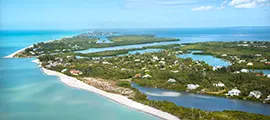
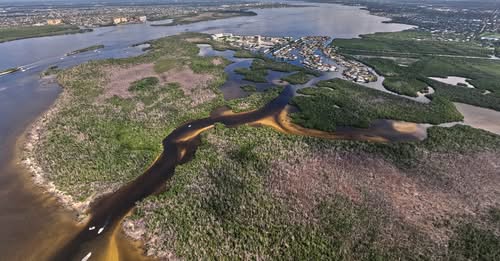
Lee County commissioners have ended litigation over an environmentally important 306-acre parcel between Punta Rassa and the Shell Point Village retirement community at the mouth of the Caloosahatchee River.
The property is actually seven separate parcels that border on the river, Matlacha Pass and San Carlos Bay.
Commissioners approved paying $5 million for the land. The owner/developer was denied permission to build on it repeatedly, the last time in 2023, and filed suit under Florida’s developer-friendly Bert Harris Act in 2024.
Purchase settles lawsuit – preserves mangrove habitat
The suit had claimed a so-called “taking” of more than $28 million in value. Bert Harris prohibits local governments from diminishing the value of land by limiting its use.
A 1960 plat showed 335 residential lots on the property. Since then portions of the land have been repeatedly ditched and cleared. The lawsuit complaint describes the land as “a far cry from pristine and (with) little conservation or environmental value.”
In fact the county’s Conservation 2020 environment land buying committee considering the property twice, with the effort ending in an impasse when the owner counter-offered at $8.6 million compared to the $1.5 million that the 2020 committee offered.
The land, the complaint states, is covered with exotic vegetation like Australian pines, Brazilian pepper and melaleuca.
By the time county commissioners turned down the development proposal the plan was down to 55 single-family homes. Robert Pritt, one of the attorneys for the owner, identified in sale documents as Canadian Romas Kartivicius, had tried to produce a development proposal that neighbors would support, but it never happened.
Developer tried to build for years
Pritt said Kartivicius has been a part-time resident here for 20 or more years.
“He thought he was doing everything everybody would want,” Pritt said. “He’d already spent a lot of money on the federal and state process.”
Pritt said the development application was only for what the federal and state reviewers said they wanted. The final rejected proposal would have placed 259 acres into a preserve, with development only on previously disturbed land.
“He did not count on so much controversy,” Pritt said. “Everybody wanted it to be bought by the county, and he has other things going on.”
Earlier plans for the land had included a marina on the Caloosahatchee plus mid-rise development. That plan was by an owner – Shell Point Yacht Club – that went bankrupt in the early 2000s recession, leaving Kartivicius as sole owner.
County spokesperson Betsy Clayton said the closing will take place within 150 days and that the property will become a preserve.
Commissioner Kavin Ruane opposed the development when he was mayor of Sanibel prior to his commission term. He made the motion to buy the land.
“I was thrilled to do it,” he said. “We knew it was a really important piece of property, but price-wise we weren’t even in the same hemisphere.”
Nearby work includes Cape Coral’s Redfish Pointe property
Ruane said there is more work to do, citing the Redfish Pointe property in southwest Cape Coral across the river from Shell Point, as well as nearby Cattle Dock Point.
Redfish Pointe is a 350-acre property owned by the Zemel family since the 1950s. The family was pushing to develop the land but withdrew a proposal to change the land use designation in February.
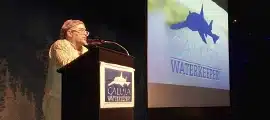
The three undeveloped river-front are the focus of a Calusa Waterkeeper forum happening Saturday October 10 at Shell Point Village. The forum will take place at the Tribby Arts Center at Shell Point Village at 9:30 a.m.
Ruane said his own involvement in the effort to buy the land was around 15 years. He said he always wanted to see the land in public hands.
“But we have to be realistic,” he said. “We are spending taxpayers’ money.”
Ruane likened the situation with the one at Kingston, the more than 7,500-acre southeast Lee development where commissioners, facing down a $100 million lawsuit, allowed as many as 10,000 homes.
“My choices were bad or worse,” he said. “Lawsuits can dictate that.”
He said he’d have rather seen all of the Kingston land preserved.
“But I’d rather be absolved of the $100 million and be able to preserve a third of it,” he said.
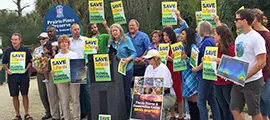
Environmental groups praise Lee for purchase
James Evans fought for the Eden Oak purchase for most of 30 years, since he began as natural resources director for the City of Sanibel in 2000. He is now the CEO of the Sanibel-Captiva Conservation Foundation.
“This is such an important acquisition,” he said. “This is great news. We are very pleased that the commissioners settled on this purchase.”
Evans said that the land is important not just for its habitat value but for the hurricane protection provided by the more than 36 acres of existing mangroves.
“Hurricane Ian played a large part in this,” he said. “After Ian we got call after call from the people at Shell Point and Palm Acres. Without those mangroves their homes would have been swept away – destroyed. A lot of those people showed up for the hearings and told their stories, and it was very compelling. I believe commissioners were affected by that.”
Other environmental groups echoed Evans’ words.
Land critical for endangered species
In a statement Calusa Waterkeeper emeritus John Cassani said “Eden Oak is a strategic acquisition for its conservation value and I am glad it was finally acquired for that purpose. There are some species on the brink such as smalltooth sawfish and diamondback terrapin that depend on the nearby waters for the habitat value.”
He said mangrove cuckoos have been sighted there and there are mosquito ditches which could be restored, as well as protecting the shoreline.
“It was always a risky location with regard to hurricanes and additional development,” he said.
Matt DePaolis is environmental policy director for Sanibel Captiva Conservation Foundation.
“Yeah it was pretty exciting,” he said. “I don’t think it’s the end-all and be-all, but it’s a great step.”
DePaolis said he supports the county plan to turn the property into a preserve.
Jason Pim, president of Calusa Waterkeeper, said “Eden Oak is one of the most ecologically important remaining large coastal properties at the mouth of the Caloosahatchee. Using it for anything other than permanent conservation would be a tremendous missed opportunity for Lee County.”
Eden Oak is one of three properties to be highlighted at a Waterkeeper forum to be held at Shell Point Village on Saturday, October 10.
“If the county keeps it as conservation land, this is exceptionally good news for the estuary and natural systems at the mouth of the river. Protecting Eden Oak helps preserve water quality, coastal wetlands, wildlife habitat, and the resilience of the Caloosahatchee estuary. Eden Oak, Cattle Dock Point, Piney Point (aka Redfish Pointe) all being conserved for their natural ecological value would be exceptional progress and stewardship,” said Pim.
The money for the purchase is a combination of General Fund dollars and risk loss funds.
“This is a really good deal for the county,” Pritt said.
Full Story