














Written by Mary Kay Robbins-Kralapp, a Calusa Waterkeeper Board Member and liaison to the Lee Communities Coalition.
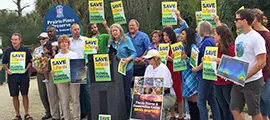
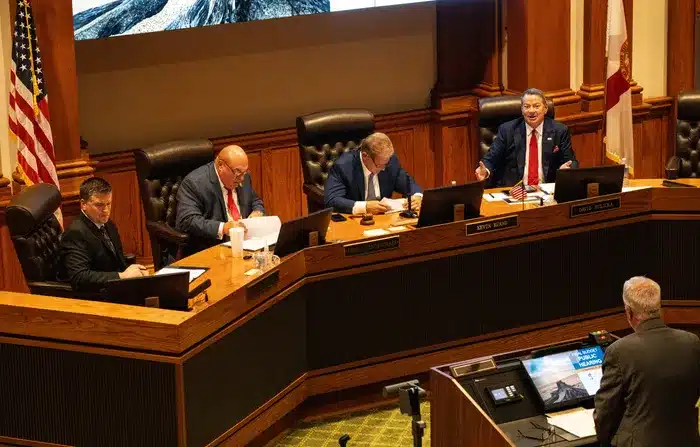
On October 21, Lee County commissioners adopted sweeping changes to the Southeast Lee County Community Plan despite repeated public objections. Residents and environmental advocates questioned the lack of cumulative environmental analysis, threats to wetlands and wildlife corridors, and the transfer of important development requirements from the Comprehensive Plan to the Land Development Code (LDC). Despite testimony, written comments, and concerns raised by the South Florida Water Management District (SFWMD), the amendment was adopted without the substantive changes opponents requested.
Commissioners suggested residents could have met with them or staff beforehand. But would those meetings have changed anything when the concerns raised through public testimony and written comments did not?
The scientific concerns are particularly troubling. Lee County combined 11 privately initiated development amendment requests into one planning initiative to improve efficiency and consistency. Yet when SFWMD raised concerns about cumulative regional impacts and specifically asked the county to consider the Corkscrew Watershed Initiative, staff’s response relied primarily on hydrologic studies prepared for individual developments rather than demonstrating how the projects’ combined impacts would affect the larger watershed.
The distinction is critical. The Corkscrew Watershed Initiative examines the interconnected relationships among groundwater, wetlands, natural flowways, and surface water across the region. Development that alters drainage, reduces wetland storage, or increases impervious surfaces can affect flooding, groundwater levels, and pollutant movement well beyond individual property boundaries. The county evaluated 11 development requests collectively for planning efficiency, but its published response did not demonstrate a comparable collective assessment of their environmental consequences.
At the adoption hearing, staff referred to a second response to SFWMD’s concerns. Yet that document has not appeared among the publicly posted case materials. Without access to that response, residents cannot determine whether the county ultimately addressed the district’s request for regional analysis before commissioners adopted the amendment.
Now, on November 3—Election Day—commissioners will consider the implementing LDC changes. Moving requirements from the Lee Plan into the LDC can reduce opportunities for public and state agency review of future changes. Holding this hearing on Election Day, when residents are also choosing their representatives, raises a troubling question: Why the urgency to complete these changes rather than allow more time for public examination?
And Southeast Lee County is not alone. A separate county initiative proposed eliminating 17 community-specific plans developed over decades with substantial resident involvement. These plans recognize that Pine Island’s coastal wetlands and estuaries, Alva’s agricultural lands and riverfront, and Buckingham’s rural landscapes have fundamentally different environmental characteristics and development pressures. Their protections were developed to address those differences, not simply to create regulations that could later be consolidated for administrative convenience.
County staff proposed relocating, consolidating, or eliminating community-specific provisions, arguing that the changes would simplify regulations without increasing allowable development density or intensity. But environmental protection involves far more than the number of buildings permitted. It also depends on where development occurs, how stormwater is managed, whether natural drainage systems and habitats are preserved, and how residents participate in decisions affecting their communities.
The proposal also would eliminate a requirement for public information meetings when developers seek changes to community plans. Following widespread opposition, commissioners paused the amendments in September, with some acknowledging they needed more time to understand the changes themselves. The Lee Communities Coalition has called for a comprehensive review with meaningful community involvement rather than rushing through changes to plans that took decades to develop.
The pause is an opportunity, not a resolution. Will the county work with individual communities to preserve protections suited to their environmental conditions, or return with essentially the same proposals under the banner of streamlining development? These plans emerged from years of community involvement. Shouldn’t changes that could fundamentally alter them require at least the same commitment to public participation?
Public participation is not simply allowing people three minutes at a microphone. It means listening, evaluating scientific evidence, and being willing to change course.
Calusa Waterkeeper works to protect and restore the Caloosahatchee River from Lake Okeechobee to its coastal waters. Yet restoration cannot keep pace with development if we continue creating the very problems we are spending millions to correct.
Our commissioners were elected to represent the public. Whose interests are they serving—and who will bear the environmental costs?
The Southeast Lee County LDC hearing is scheduled for November 3, 2026, at 9:30 a.m., at the Old Lee County Courthouse, 2120 Main Street, Fort Myers. Learn more about the community planning proposals at LeeCommunities.com.