





Originally published on Florida Weekly by Garry Overbey on August 26, 2026
It was supposed to be a simple summer job. A contractor set to work clearing Brazilian pepper, Australian pine and other vegetation from the 47-acre Seven Islands development in Cape Coral.
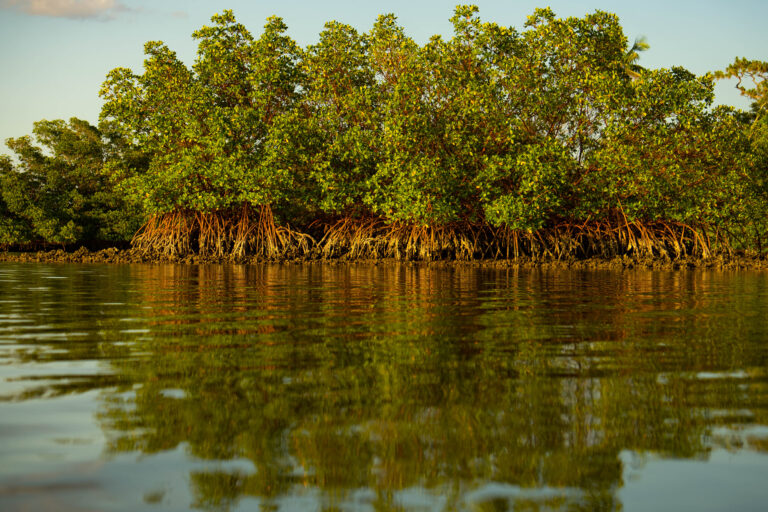
Instead, an estimated 570 feet of red mangrove shoreline was also torn out. The developer claimed it was a mistake. The South Florida Water Management District later issued a notice of violation.
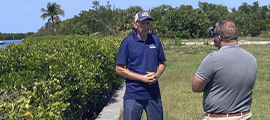
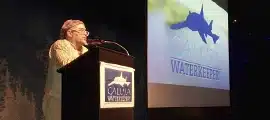
“The plan was to leave the mangroves on the spreader waterway and put seawalls upland of that,” says Jason Pim of the regional advocacy group Calusa Waterkeeper. “But, unfortunately, whoever hopped in the excavator wasn’t aware of that plan.”
The incident wasn’t the first time mangroves have been removed in Cape Coral or in the interconnected coastal system of South Florida. In 2019, workers clearing vegetation at Four Mile Cove also removed mangroves and were required to replant and mitigate the damage. Property owners in Collier County have done the same, even if on smaller tracts, in recent years.
For conservationists, the incidents raise a question that extends beyond individual cases and beyond Cape Coral: How do you protect a vital part of the coastal ecosystem when the threats aren’t always as simple as someone cutting down trees?
Across South Florida, mangroves are being pressured by development, altered water flow, boat wakes, stronger storms and rising seas. And while mangrove forests are remarkably resilient, scientists say protecting one that’s intact is far easier than rebuilding one after it’s damaged.
Full Story