











Originally published by PEER & Waterkeepers Florida on July 28, 2026
State Pollution Enforcement Actions Remain Near Historic Lows as Population Explodes
A new report released today by Public Employees for Environmental Responsibility (PEER) and Waterkeepers Florida finds that the majority of Florida’s waterways are failing to meet state water quality standards while enforcement of the state’s environmental laws remains far below historical levels.
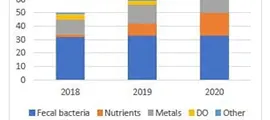
The report, Majority of Florida Waterways Fail Water Quality Standards as State Enforcement Remains Near Historic Laws, examines 37 years of Florida Department of Environmental Protection (DEP) enforcement data alongside current water quality data. It finds that fecal bacteria and nutrient pollution are the most widespread contaminants fouling Florida’s rivers, lakes, and estuaries — pollution driven by agricultural runoff, wastewater discharges, and excess fertilizer use.
The report finds that while DEP enforcement actions ticked up slightly to 755 in 2025, that number is still less than half the state’s historical average. Between 1996 and 2010, DEP initiated an average of 1,303 enforcement cases per year; between 2019 and 2025, that average fell to just 654 — even as Florida’s population grew by nearly five million residents over the same period.
“Florida’s enforcement program has been hollowed out over the past fifteen years, even as its population and pollution problems have grown,” said PEER Executive Director Tim Whitehouse. “You cannot protect clean water with an enforcement program that is running at half strength.”
“The data are unambiguous: most of our waterways are not meeting the standards designed to protect public health and the environment. Our current water regulatory system is not working,” said Jen Lomberk, Esq., Vice-Chair of Waterkeepers Florida. “Floridians are swimming, fishing, and boating in waters that the state’s own data show are impaired. That should alarm every resident and every elected official in this state.”
The report’s authors call for stronger enforcement of existing environmental laws, more protective pollution-control policies, and greater transparency from state and local governments about water quality conditions — steps they say are essential to protecting Florida’s public health, wildlife, and multi-billion-dollar tourism economy.
Full Report